The ultimate guide to Sri Lankan breakfast.

Ethan Miller
Travel Writer

If there is one thing that will get you out of bed early in Sri Lanka, it isn’t just the surfing or the sunrise safaris. it is the smell of coconut milk and chili wafting from the kitchen. While many travelers expect toast, omelettes, or pancakes, the island offers something far more exciting. Sri Lankan breakfast is a feast of textures and flavours, ranging from the creamy and mild to the fiery and crisp. It is arguably the most diverse meal you will eat here.
For the foodie traveler, skipping the hotel "continental" buffet in favor of a local breakfast is mandatory. This is not just a meal; it is a ritual. Here is everything you need to know about Hoppers, String Hoppers, and the delicious curries that accompany them.
The King of Breakfast: The Hopper (Appa)
When people talk about Sri Lankan food, they are usually talking about the Hopper. Known locally as Appa, these bowl shaped pancakes are iconic. They are made from a fermented batter of rice flour and coconut milk, which gives them a distinct, slightly sour sourdough flavor and a spongy center.
The magic happens in the cooking method. The batter is swirled around a small, wok like pan. The edges become paper thin and incredibly crispy, shattering like a wafer when you touch them. The bottom, however, remains soft, doughy, and sponge-like, absorbing the flavors of whatever curry you pair it with.
The Egg Hopper Variant
While plain hoppers are delicious, the "Egg Hopper" (Biththara Appa) is the true star. An egg is cracked into the soft center of the pancake as it cooks, steaming gently until the white is set but the yolk remains runny. It is the ultimate breakfast package: carbs, protein, and flavor all in one.
How to Eat It Like a Local: First, use your hands. Tear off a piece of the crispy edge. Dip it into the soft yolk in the center. Then, scoop up a generous amount of Lunu Miris (a spicy paste made from onion, chili, and lime) or Seeni Sambol (a sweet and spicy onion relish). The combination of the creamy egg, the crunch of the crepe, and the heat of the chili is unforgettable.
The Steamed Classic: String Hoppers (Indi Appa)
Do not confuse Hoppers with String Hoppers. Despite the similar name, they are entirely different beasts.
String Hoppers, or Indi Appa, look like small nests of fine, steamed rice noodles. They are made by pressing rice flour dough through a sieve onto small wicker mats, which are then steamed. They are much lighter than bread or rice, making them a perfect, airy breakfast that won’t weigh you down before a day of hiking or exploring.
Because the noodles themselves are mild, they act as a sponge for flavor. You do not eat them dry. You drown them.
The Perfect Pairing: The traditional way to eat String Hoppers is to flood your plate with Kiri Hodi, a mild, turmeric infused coconut milk gravy (often cooked with fenugreek and cinnamon). Once the noodles are soaked, you top them with Pol Sambol freshly scraped coconut mixed with chili powder, lime, and salt. The result is a mouthful of juicy, coconutty spice that wakes up your palate.
The Ceremonial Dish: Milk Rice (Kiribath)
If you are lucky enough to be in Sri Lanka during a festival, a birthday, or the first day of the month, you will likely be served Kiribath.
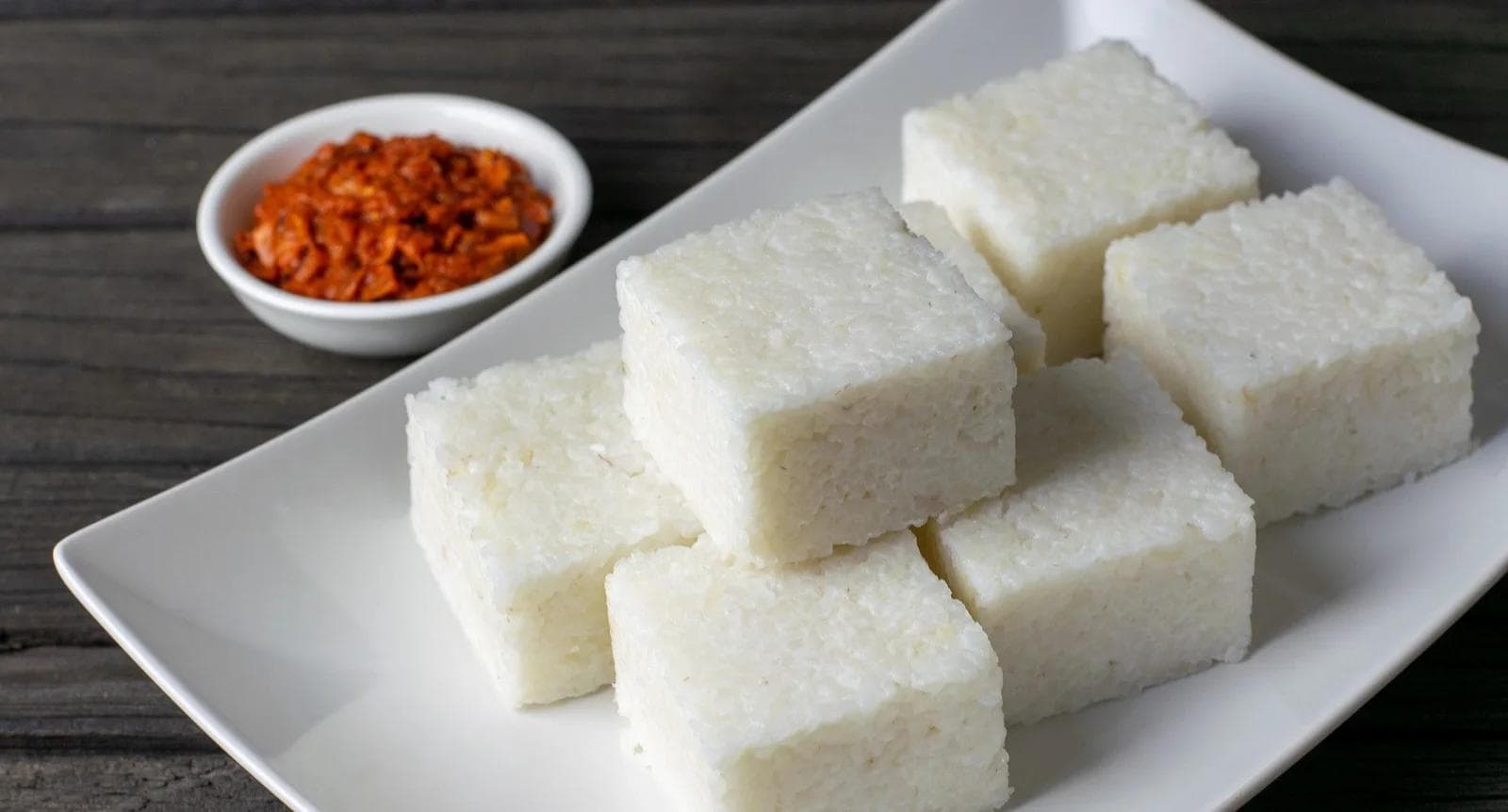
Kiribath translates literally to "Milk Rice." It is white rice cooked in thick coconut cream until it becomes sticky and rich, similar to a savory rice pudding but much firmer. It is then pressed flat and cut into diamond shapes.
This dish symbolizes prosperity and good luck. It is heavy, creamy, and incredibly comforting. Unlike the light String Hoppers, Kiribath is a hearty meal that will keep you full for hours. It is almost always served with Lunu Miris to cut through the richness of the coconut cream. For a sweeter version, ask for it with Jaggery (unrefined palm sugar) or bananas.
The Rustic Choice: Pol Roti
Sometimes, simple is best. Pol Roti is a rustic flatbread made from wheat flour and generous amounts of fresh grated coconut.
These rotis are thicker and harder than Indian naan or chapati. They have a brilliant texture thanks to the bits of coconut inside the dough. You will often find them at roadside stalls, cooked on a hot iron griddle until they are charred in spots. They are chewy, coconutty, and perfect for dipping into a spicy dhal curry. Some versions even have chopped green chilies and onions kneaded right into the dough for an extra kick.
The Essential Sambols
No Sri Lankan breakfast is complete without the "Sambols." These are the relishes that add the fire and flavor to the meal.
Pol Sambol (Coconut Relish): This is the national condiment of Sri Lanka. It is a mix of freshly grated coconut, red chili powder, lime juice, red onions, and Maldive fish (cured tuna). It is zesty, spicy, and fresh.
Lunu Miris (Chili Paste): A grinding stone is used to crush red onions, dried red chilies, salt, and lime into a coarse paste. It is incredibly spicy and savory, acting as the perfect contrast to mild dishes like Kiribath or plain Hoppers.
Seeni Sambol (Sweet Onion Relish): This is a caramelized onion relish that is sweet, spicy, and savory all at once. It is slow cooked with cinnamon, cardamom, and sugar, making it the perfect partner for an Egg Hopper.
Where to Find the Best Breakfast
While high end hotels in Colombo and Galle do excellent hopper stations, the best breakfast is often found on the street.
Look for the "Hela Bojun" outlets. These are open air food courts run by the Ministry of Agriculture to empower local women. The food here is incredibly cheap, freshly made in front of you, and 100% authentic. You can watch the women making the hoppers and rotis right before they land on your plate.
Whether you choose the crunch of an Egg Hopper or the comfort of Kiribath, breakfast in Sri Lanka is an adventure. So, wake up early, follow the smell of the curry leaves, and dig in with your hands!
Enjoyed this story? Share it
About the Author
Ethan Miller
A passionate heritage explorer and travel storyteller dedicated to uncovering the sacred history, world-class surf breaks, palm-fringed beaches, and the vibrant coastal culture of Sri Lanka — the Pearl of the Indian Ocean.